

Not just the performance pressure or the injury recovery, but the identity, the culture, the silence that sport often demands, and the grief that shows up when the game changes.
-
Maybe you've had to push through things, physically and emotionally, for so long that you don't know how to stop.
-
Maybe you've been in locker rooms, on teams, or in sports cultures where being fully yourself wasn't safe.
-
Maybe you're in a transition, from injury, retirement, or just a changing relationship with your sport, and you don't know who you are on the other side of it yet.
I know how hard it is to find a therapist who actually understands what it means to be an athlete.
Athletes are my people.
I've played competitive soccer for 32 years, from university through semi-pro levels and still play recreationally now into my late 30s. I also played tackle football with the Seattle Majestics and the DC Divas, and spent time as the only AFAB person on a male semi-pro tackle football team with the Zona Bears. I coached soccer for over 20 years. And I founded Girl Boss Sports, a company that was dedicated to athlete equity and the humans that sport too often leaves behind.
Across decades of competition, I've navigated my share of serious injuries, so I understand from the inside what it's like when your body stops cooperating, when recovery feels endless, and when the psychological weight of being sidelined is just as heavy as the physical one. I also know what it's like when your identity is wrapped up in your body's ability to perform. I know the culture, the silence, the grief of transition, and the particular exhaustion of being the queer person on the team in spaces that often weren't built for us. You won't have to explain any of that to me as I already know the terrain.
Challenges you shouldn’t have to face alone
-
Injury recovery, including the emotional and psychological layers that physical rehab doesn't touch
-
Athletic identity loss that comes from retirement, forced stopping, or a body that won't do what it used to
-
Performance anxiety, perfectionism, and worth tied to what your body produces
-
Trauma held in the body from years of impact, overriding pain, or high-pressure environments
-
Being queer, gender-expansive, or non-monogamous in sports cultures that weren't built for you

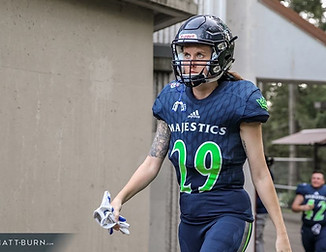

I hold space for the full arc of an athlete's life
Not just the performance, but the identity, the culture, the transitions, and the parts that never made it into the highlight reel.
And being a queer athlete comes with its own particular texture. Many athletic spaces are genuinely affirming and community-building in ways that feel rare and sacred. And also: there are layers. The moments you weren't sure how much to share. The relationships and identities you held a little more carefully depending on the team, the coach, or the culture. The way queerness and sport have woven together in your life in ways that are sometimes beautiful and sometimes complicated and often both at once.
A Space Where Your Whole Story is Welcome
You don't have to be a professional athlete. You don't have to be currently competing. You just have to be someone whose relationship with sport has shaped who you are, and who's ready to explore what's underneath.
Ways We Work Together


I provide superbills (receipts) for clients with out-of-network insurance coverage, and many people receive significant reimbursement this way. You don’t have to navigate it alone; my staff will walk you through each step and offer support along the way. I also keep a limited number of sliding scale spots for those who can’t pay the full session rate. If working together feels right but cost is a barrier, please reach out to info@courageousyou.us to ask about current availability. We’ll do our best to make care accessible.
Frequently Asked Questions
Do I have to be a current or competitive athlete to work with you?
Not at all. This work is for anyone whose athletic identity, past or present, has meaningfully shaped who they are. That includes recreational athletes, retired players, coaches, and people navigating injury or transition at any level.
How does KAP work specifically for athletes?
KAP creates a neuroplastic window, or a period when the brain is especially open to change. For athletes, this can be particularly useful for releasing deeply held performance beliefs, processing body-based or impact trauma, and exploring identity beyond sport. We layer somatic work on top of the medicine to help the body participate in the healing, not just the mind.
I've never done therapy focused on my athletic identity. Where do we start?
We start wherever you are. Some people come in with a specific thing, such as an injury, a retirement, a career-ending moment. Others just know something is stuck and sport is part of it. Either way, we go at your pace and let your experience guide us.
How is this different from sports psychology?
Sports psychology is brilliant at what it does; performance optimization, mental skills training, pre-competition preparation. What I offer touches on this and often also goes in a different direction. Instead of only focusing on improving performance, we focus on what's underneath it: the trauma that fueled your drive, the identity that got built around your body's ability to produce, the grief that comes with injury or transition, and the nervous system patterns that developed from years of high-pressure competition. KAP and somatic work can reach layers that talk-based performance coaching often can't.
I've had a major injury. Can KAP help with the psychological side of recovery?
Yes, and this is one of the areas I feel most personally connected to. Injury recovery in traditional sports medicine focuses almost entirely on the physical. But the psychological weight of being sidelined including the fear, the grief, the identity disruption, the complicated relationship with a body that feels like it let you down, is often just as significant and almost never addressed. KAP and somatic work can help you process what the injury stirred up at a level that physical rehab simply doesn't reach.
Do you accept insurance?
I do not bill insurance directly. However, I provide superbills that you can submit to your insurance provider for potential out-of-network reimbursement for psychotherapy sessions.
To help make the process easier, Courageous You partners with Thrizer, a service that helps clients check their out-of-network benefits and submit claims for reimbursement.
You can use the benefits check tool to see whether you may be eligible for reimbursement before starting therapy. I also recommend contacting your insurance provider directly to better understand your out-of-network mental health benefits.